English| EUR
Suggested for you
More currencies
Choose a language
South Australia offers a structured pathway from first jump to solo certification through Accelerated Freefall programs based at Lower Light. This guide walks through the training stages, ground school requirements, and what the progression to independent skydiving looks like for serious learners.
Quick answer
A skydiving course in Adelaide follows the Accelerated Freefall (AFF) structure: eight levels of training jumps paired with ground school sessions covering canopy control, emergency procedures and freefall stability. Most students complete the AFF program in two to four weeks depending on weather and availability, then log additional solo jumps to build toward an A-license. The facility at Lower Light operates seven days a week from 07:00 to 18:00, with morning slots preferred for stable conditions.
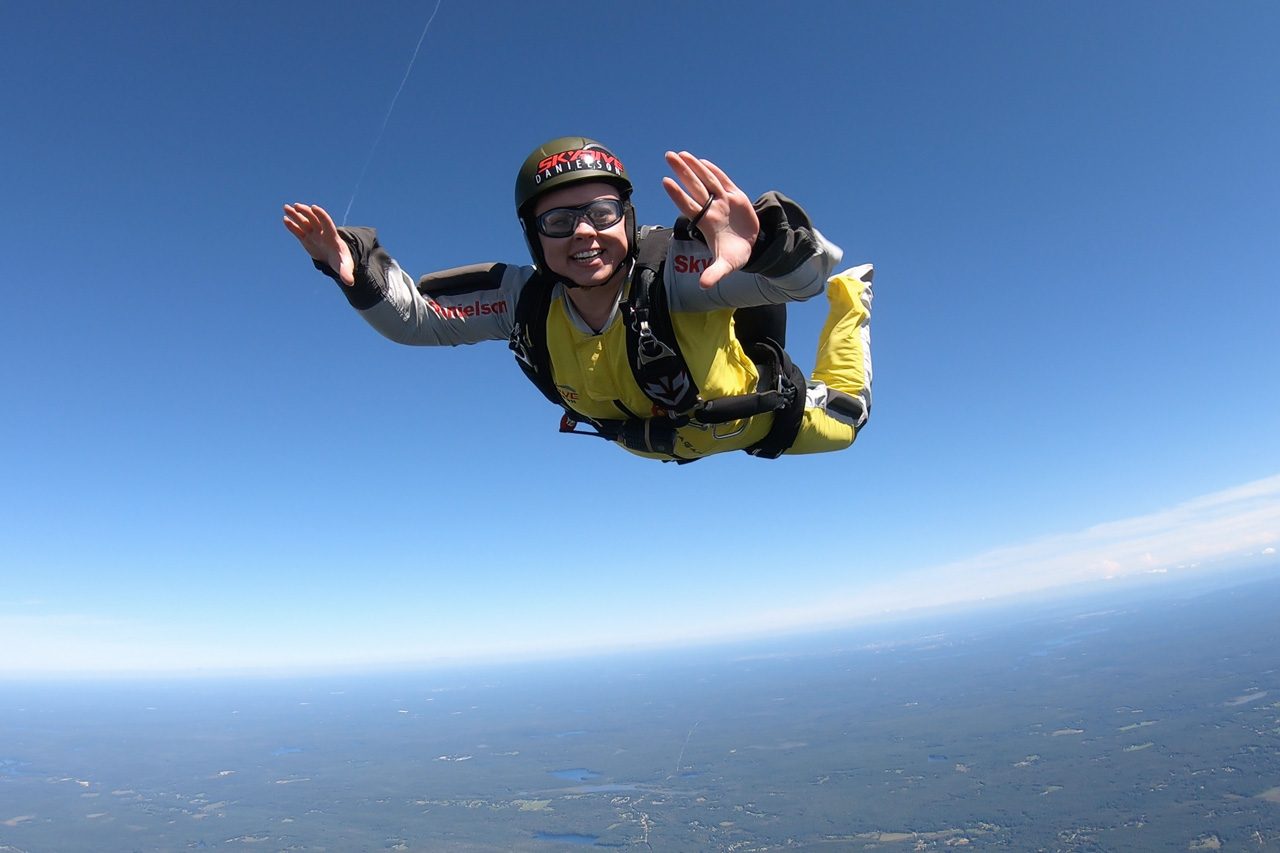
The Accelerated Freefall method remains the fastest route to solo certification, compressing what once took months of static-line jumps into a matter of weeks. Students exit the aircraft with two instructors on the first three levels, practicing altitude awareness, body position and deployment sequences while falling at terminal velocity. By level four the solo instructor releases physical contact, and by level eight the student manages the entire jump independently—exit, freefall maneuvers, canopy deployment, landing pattern. Ground school precedes every jump level, covering the theory behind what happens in the air. Sessions address canopy flight characteristics, how to read wind direction from ground markers, malfunction recognition and reserve activation procedures. The curriculum is not abstract: each briefing ties directly to the skills tested on that day's jump, and debrief sessions review helmet-camera footage to identify what worked and what needs adjustment before the next level. Weather dictates the training pace more than any other variable. Morning operations at the Lower Light drop zone benefit from calmer winds and better visibility, which is why the facility recommends arrivals between 07:00 and 12:00. A student who clears all eight AFF levels still needs at least 25 total jumps to qualify for an A-license, the entry credential for unsupervised skydiving. Many continue toward B and C ratings, which unlock permissions for larger formations, night jumps and eventually coaching or tandem-instructor work. The skydiving course Adelaide pathway is not recreational in the tandem sense—it is vocational preparation for people who intend to jump regularly. Progression depends on demonstrated competence at each stage, not seat time, and students repeat levels when needed. The commitment extends beyond the initial AFF: maintaining currency requires ongoing jumps, and moving up the license ladder means additional endorsements, written exams and proficiency checks. For those willing to invest the time and focus, the result is autonomy—the ability to plan, execute and land a skydive without supervision.
“By level eight the student manages the entire jump independently—exit, freefall maneuvers, canopy deployment, landing pattern.”
The certification pathway from student to licensed skydiver follows a structured progression through three main license levels, typically requiring 25-50 jumps and several months of consistent training. Each stage builds on specific competencies before advancing to the next qualification level.
Begin with Accelerated Freefall training, which consists of ground school followed by your first solo freefall with two instructors. Students often underestimate the physical demands of maintaining body position during the 60-second freefall.
Work through eight progressive solo jumps, each introducing new skills like turns, forward movement, and tracking. Most students complete this phase in 8-12 jumps, though some levels may require repetition if competency standards aren't met.
After passing AFF Level 8, complete at least 25 total jumps with demonstrated proficiency in canopy control, emergency procedures, and freefall maneuvers. This consolidation phase allows you to refine skills without instructor supervision while building the experience hours required for certification.
Submit your logbook documentation to the Australian Parachute Federation once you've met all requirements, including written exam completion and pack-your-own-parachute training. The license permits unsupervised jumping at any affiliated drop zone and serves as the foundation for advanced ratings like B, C, and D licenses.
Access to the facility at 4158 Port Wakefield Road is free of charge for all visitors. Costs for the skydiving course are determined by individual training jumps and specific certification requirements.
Verdict: While facility entry is free, the total cost for serious hobbyists depends on the number of jumps required and specific certification pathway fees.
The facility operates daily to support consistent training schedules for those pursuing skydiving certification. Students can access the drop zone throughout the week during the following hours.
For those pursuing a skydiving course, the best arrival window is 07:00–12:00. Morning weather conditions are typically more stable, providing consistent air for training jumps and ground instruction.
—
Students benefit from focused attention and minimal delays. The stable morning air assists in maintaining a consistent training cadence.
15°C to 24°C
Mild temperatures provide clear skies and predictable wind patterns. These months are conducive to regular progress through certification requirements.
14°C to 23°C
Spring offers favorable skydiving conditions with stable atmospheric pressure. This period is well-suited for completing intensive training modules.
Verdict: The optimal time for training is during weekday mornings in April or October, when meteorological stability supports continuous progress.
Complete these steps before arriving at 4158 Port Wakefield Road, Lower Light for your skydiving course.
The skydiving facility is located at 4158 Port Wakefield Road, Lower Light, SA 5501. The most direct approach for students commuting for training is via private vehicle.
M20 (Port Wakefield Road) from Adelaide CBD
Direct transfer via M20
Ample parking is available on-site for those driving to the facility. Plan your arrival for the early morning to align with more stable weather conditions.
Everything you need to know about skydiving course adelaide
A skydiving course Adelaide typically includes ground-based theoretical training and practical instruction on canopy control and landing patterns. Serious hobbyists progress through various levels to gain their Australian Parachute Federation license.
To begin your parachute training, you must meet minimum age requirements and possess a reasonable level of physical fitness. Candidates often need to undergo a medical assessment to ensure suitability for high-altitude activities.
You can arrange your skydiving course Adelaide program by visiting the official website. The platform provides pathways for both novice learners and experienced canopy pilots looking to advance their skills.
The best arrival window is 07:00–12:00, as morning weather conditions are typically more stable for skydiving operations. Starting early helps minimize the impact of afternoon wind shifts on your training schedule.
There is 0 AUD entrance fee to the facility itself. While you can visit for information at no cost, please note that actual jump costs and membership fees vary by package.
Before starting a skydiving course Adelaide, ensure you have appropriate footwear and comfortable clothing for flight operations. Familiarizing yourself with basic aerodynamics and the landing circuit will also assist in your progression.
Yes, the drop zone offers structured progression pathways for those pursuing certification. These programs allow students to learn essential skydiving techniques in South Australia under the guidance of qualified instructors.